Brazilian Coffee Beans: What Makes Them Different?
Brazil is the world's largest coffee producer — but what makes Brazilian coffee beans stand out? From the growing conditions to the flavour profile, here's what you need to know before you buy.
Brazil produces more coffee than any other country on earth. Around one third of all the coffee consumed globally starts its journey on a Brazilian farm. But volume alone doesn't explain why Brazilian coffee beans have earned such a loyal following among specialty roasters and coffee lovers alike.
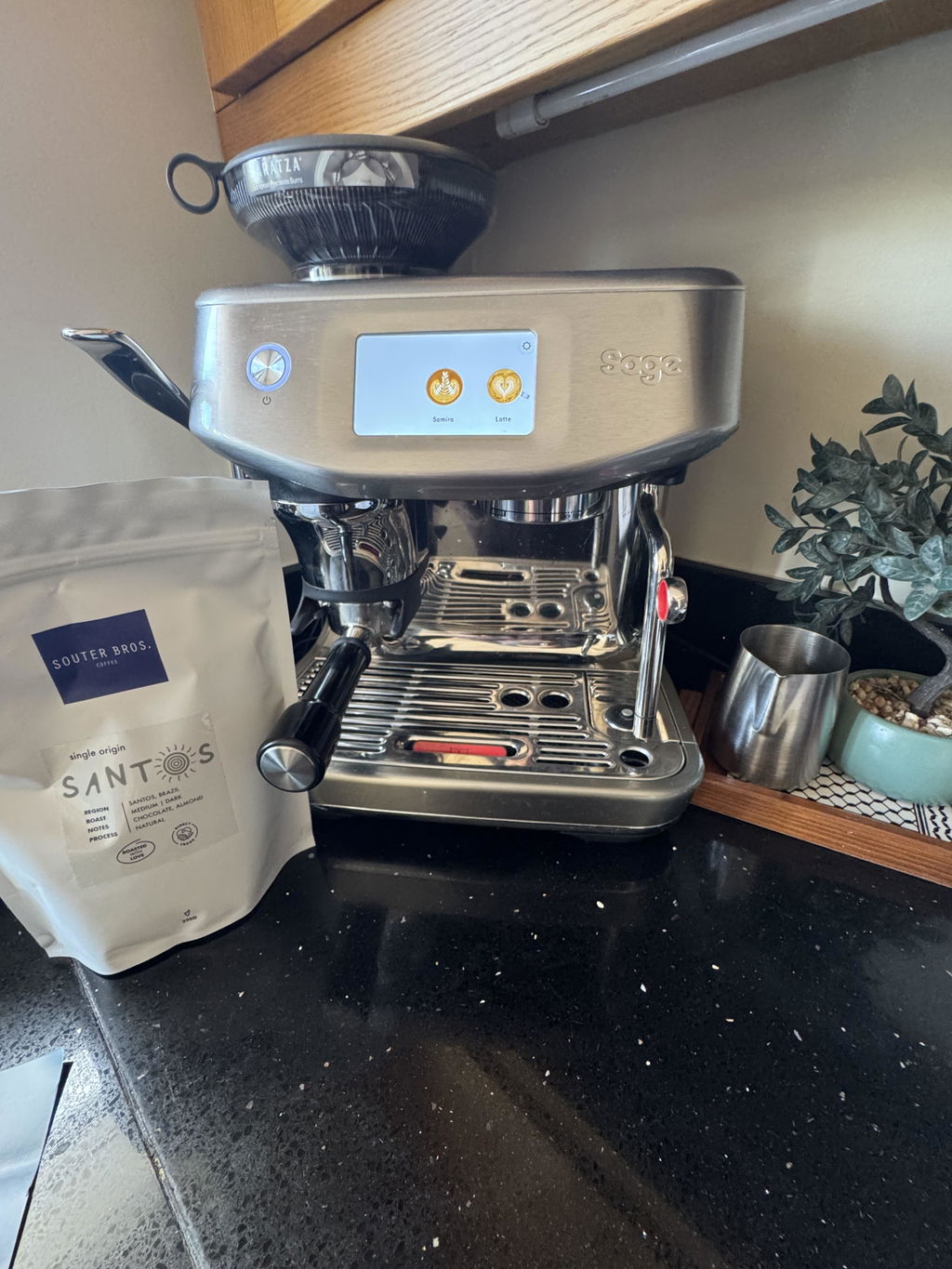
Here's what actually makes them different — and why our single origin Brazilian Santos is the coffee that keeps people coming back.
Where Brazilian Coffee Comes From
Brazil's coffee-growing regions span a vast area, but the finest beans tend to come from the highlands of São Paulo, Minas Gerais, and Espírito Santo. These states sit between 800 and 1,400 metres above sea level — high enough to slow the ripening of the coffee cherry and develop complex sugars, but not so extreme that the beans become sharp or overly acidic.
The climate is consistent: warm days, cool nights, and a reliable dry season that makes sun-drying the beans a practical and flavour-enhancing choice.
How Brazilian Coffee Is Processed
Most Brazilian coffee is processed using the natural (dry) method — the whole coffee cherry is laid out to dry in the sun before the bean is extracted. This is different from the washed method used in many East African and Central American origins, where the fruit is removed before drying.
Natural processing has a significant effect on flavour. As the bean dries inside the cherry, it absorbs the fruit's natural sugars. The result is a coffee with a naturally sweet, full-bodied character — lower acidity, rounder flavour, and a long, satisfying finish.
What Brazilian Coffee Tastes Like
Brazilian coffee is the definition of approachable. It's not trying to challenge you — it's trying to please you. Expect:
- Aroma: Roasted almonds, warm chocolate, subtle caramel
- Flavour: Dark chocolate, gentle nuttiness, brown sugar sweetness
- Body: Full and silky — substantial in the cup
- Acidity: Low and mellow — easy on the palate
- Finish: Long, smooth, and satisfying
This flavour profile is why Brazilian beans are so widely used as the base for espresso blends. They provide body and sweetness that balances brighter, more acidic origins. But as a single origin, they stand entirely on their own.
Brazilian Coffee vs Other Origins
If you've tried Ethiopian or Kenyan coffee, you'll know those origins tend to be bright, fruity, and high in acidity — almost wine-like. Colombian coffees sit in the middle: balanced, clean, and versatile.
Brazilian coffee sits at the other end of the spectrum. Lower acidity, heavier body, sweeter finish. It's the coffee that converts people who think they don't like coffee — and keeps seasoned drinkers coming back for something reliable and deeply satisfying.
Why Single Origin Brazilian Coffee Matters
Most Brazilian coffee ends up in blends — it's cheap enough to use at scale and forgiving enough to mask inconsistencies from other origins. But when you source directly from a single farm, as we do at Souter Bros., you get something the blends can't offer: traceability, consistency, and a flavour profile that's genuinely distinctive.
Our Brazilian Santos beans come from the São Paulo highlands, sun-dried by the same family farm that's worked the same land for generations. Every batch is small, roasted to order, and dialled in to bring out the chocolate and almond notes the origin is known for.
How to Brew Brazilian Coffee
Brazilian coffee is one of the most forgiving origins to brew — its low acidity means it's hard to over-extract, making it a great choice whether you're an experienced home brewer or just starting out.
- Espresso: Where it truly shines. Full body, low acidity, and natural sweetness make it ideal as a straight shot or the base for milk drinks
- Cafetière / French press: The full immersion brewing method suits the heavy body perfectly
- Filter / pour over: A medium-coarse grind brings out the chocolate notes without any bitterness
- Cold brew: Excellent — the natural sweetness comes through beautifully without any added sugar
Try Our Single Origin Brazilian Santos
Available in 250g and 1kg bags, whole bean or ground to your preferred method. Medium-dark roast, small-batch roasted to order at our London roastery.
→ Shop our Single Origin Brazil Santos Coffee
Interested in wholesale? We supply independent cafés, restaurants, offices, and hospitality businesses across the UK. Find out about wholesale here.