Why Fresh-Roasted, Small-Batch Coffee Tastes Better (And How to Buy It in the UK)
Coffee is a fresh product with a shelf life measured in weeks, not years. What roast dates really mean, and how to buy properly fresh coffee beans online in the UK.
Here's a question worth asking about the coffee in your cupboard: when was it roasted? Not the best-before date — the roast date. If the bag doesn't say, that's usually the answer: long enough ago that they'd rather not tell you.
Coffee is a fresh product
Roasted coffee is at its peak from a few days to about six weeks after roasting. In that window you get the full expression of the bean — the fruit, the chocolate, the sweetness, the aroma that fills the kitchen. After that, the aromatic compounds that make coffee interesting steadily fade, and what's left is the generic "coffee" flavour: bitter, flat, familiar.
Supermarket coffee typically sits in a warehouse, then a distribution centre, then a shelf. By the time you brew it, it can be six months to a year past roast. It isn't bad — it's just a shadow of what it was. That single fact explains most of the difference between supermarket coffee and specialty coffee, before quality of beans even enters the conversation.
What "small batch" actually means (and why it matters)
"Small batch" gets used loosely, so here's the practical meaning: roasting in quantities small enough that the coffee is sold and drunk while it's fresh, and the roaster can pay attention to each batch.
Industrial roasters run tonnes at a time and optimise for consistency and shelf life. A small-batch roaster runs kilos at a time and optimises for taste: each origin gets its own roast profile — the bright Colombian treated differently from the chocolatey Brazilian — and each batch is tasted before it goes out. When we roast in London, the coffee that leaves us was green beans days earlier, not months.
How to buy fresh roasted coffee in the UK
1. Look for a roast date. The single best signal. A roaster proud of their freshness prints it on every bag.
2. Buy from the roaster, not a middleman. Buying coffee beans online direct from a roastery means it's roasted, bagged and posted — often within days. Every extra step in the chain adds weeks.
3. Prefer whole bean where you can. Ground coffee stales in days; whole beans keep their character for weeks. If you don't have a grinder, buy ground in smaller quantities, more often. (We grind to order for cafetière, filter or espresso, so it's ground hours before it ships, not months.)
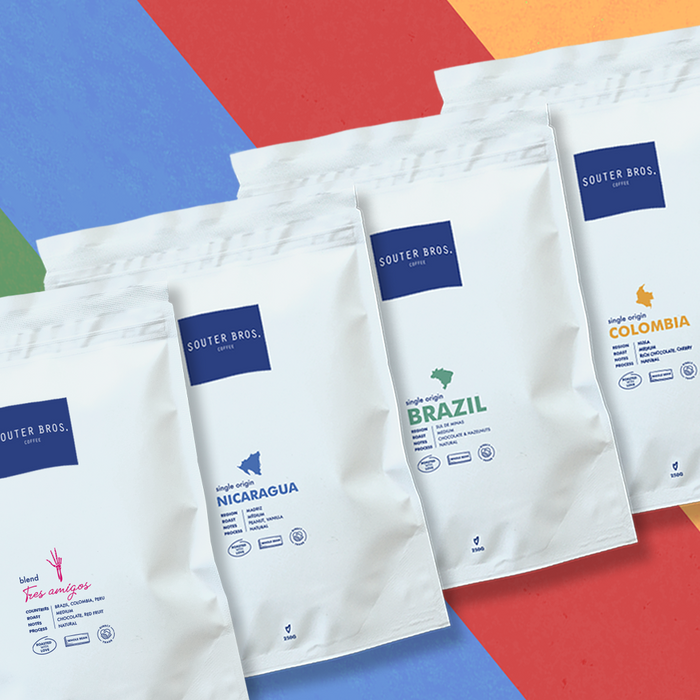
4. Buy little and often. Two 250g bags a month beats one kilo a quarter. This is also, not coincidentally, why our Essential Four Bundle is four 250g bags rather than one big sack.
Storing it properly once it arrives
Keep it simple: airtight, cool, dark, and not the fridge. The original bag with the top rolled down tightly, kept in a cupboard, does the job for the few weeks the coffee should last you. Don't decant into a pretty glass jar on a sunny worktop — light and oxygen are exactly what you're protecting it from.
Taste the difference yourself
The freshness argument sounds abstract until the first time you open a bag roasted the same week and the smell hits you from arm's length. Every bag we ship is roasted to order in London, in small batches, from beans we source directly from growers. Browse the range, or start with The Essential Four Bundle — free UK delivery over £25, and 20% off your first order with code WELCOME20.